Incident Overview: A China state-aligned threat actor tracked as Storm-0940 compromised ConnectWise Cloud Backup credentials to reach downstream Microsoft 365 enterprise tenants. By deploying an autonomous AI penetration-testing framework named ARTEX, the attackers sustained automated sign-in velocity peaking at 2,900 attempts per minute.
2,900 sign-in attempts a minute. That is roughly 48 every second—a pace no human operator can replicate.
That was the peak tempo reported by Microsoft in an urgent advisory detailing a major cyber campaign orchestrated by a threat actor it tracks as Storm-0940. According to threat intelligence analysts, the group weaponized an agentic AI penetration-testing framework called ARTEX to target over 2,250 Microsoft 365 enterprise tenants following the compromise of the ConnectWise Cloud Backup infrastructure.
This operational briefing breaks down how the supply chain compromise unfolded, how autonomous AI agents accelerated lateral movement, which findings are confirmed, and the defense actions enterprise administrators must execute immediately.
The Short Version
| Operational Dimension | Confirmed Findings |
|---|---|
| Attributed Threat Actor | Storm-0940, a China state-aligned cyber espionage group active since 2021 |
| Compromised Platform | ConnectWise Cloud Backup (formerly SkyKick), an enterprise backup utility connected to customer Microsoft 365 tenants |
| Autonomous AI Tooling | ARTEX, an agentic AI penetration-testing and lateral movement framework |
| Campaign Scale | Hundreds of organizations targeted; authentication attempts directed against 2,250+ enterprise tenants |
| Targeted Sectors | Government, defense industrial base, critical energy, financial services, tech vendors, and legal organizations |
| Compromise Severity | While most brute-force attempts failed, persistent access was established across multiple downstream environments |
| Diplomatic Response | China’s embassy in Washington formally rejected the attribution findings |
Incident Timeline
| Date (2026) | Observed Operational Activity |
|---|---|
| Early September | Microsoft observes Storm-0940 deploying the ARTEX agentic framework in reconnaissance across hundreds of corporate environments. |
| October 10 – 14 | A distributed password-spraying wave targets 327 Microsoft 365 and Exchange Online accounts across eight organizations, generating 151,000+ failed logons. |
| October 15 | Threat actors compromise ConnectWise Cloud Backup credentials, using autonomous agents and shared infrastructure to pivot downstream. |
| October 16 | ConnectWise issues its initial security advisory warning enterprise partners of abnormal service behavior. |
| October 17 | ConnectWise temporarily takes affected backup services offline to contain credential exposure. |
| October 21 | Microsoft publicly attributes the campaign, and ConnectWise begins structured, phased service restoration. |
How the AI-Driven Attack Worked
The campaign demonstrated how modern threat groups pair software supply chain footholds with agentic automation:
| Phase | Stage Name | Observed Adversary Tactics |
|---|---|---|
| 1 | Infrastructure Warmup | Initial password-spraying waves warm up attack proxies and identify target tenant boundary configurations. |
| 2 | Privilege Capture | Adversaries gain control of high-privilege service credentials tied to ConnectWise Cloud Backup applications. |
| 3 | Supply Chain Pivot | Compromised OAuth multi-tenant permissions provide direct transit routes into downstream customer Microsoft 365 environments. |
| 4 | Agentic Automation | The ARTEX agentic tool scans tenant architectures, sprays credentials, and programmatically abuses directory permissions. |
| 5 | Directory Reconnaissance | Agents query Microsoft Graph APIs, enumerating tenant users, sensitive security groups, and privileged administrator roles. |
| 6 | Persistence Solidification | Attackers alter application credentials and create secondary service principals to ensure enduring tenant foothold. |
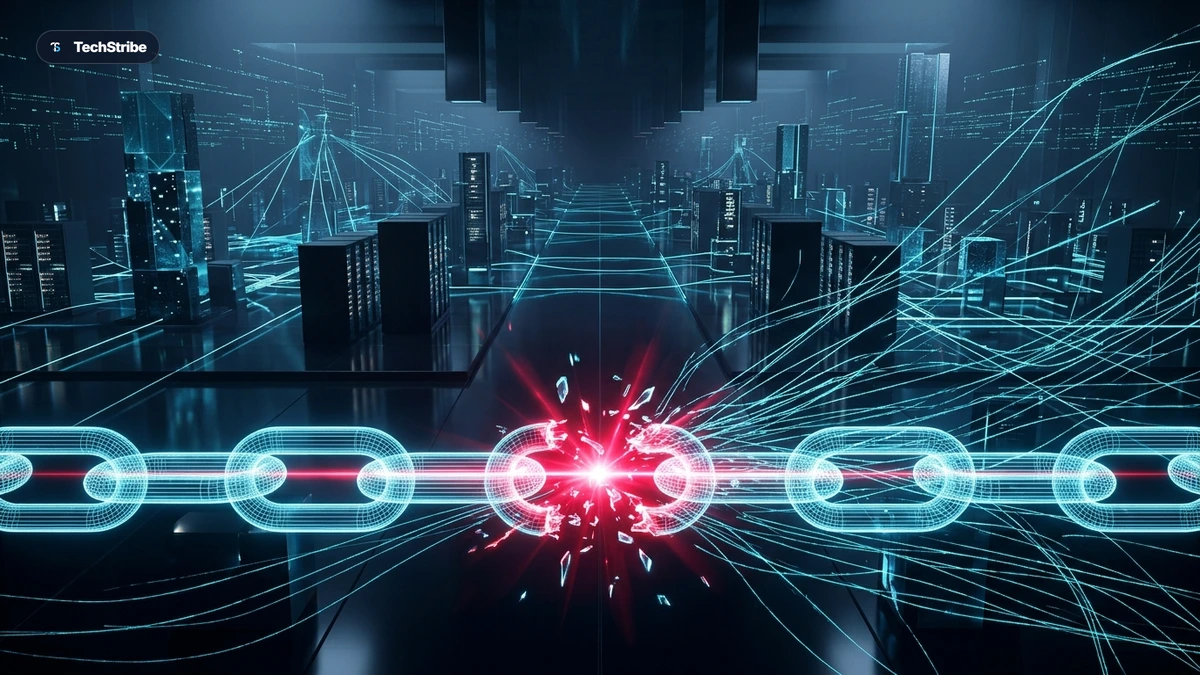
Architectural Warning: Third-party SaaS backup and administrative utilities frequently operate with broad delegated permissions. Once an upstream credential is compromised, adversaries can traverse directly into downstream enterprise cloud computing architectures without triggering standard perimeter alarms.
What Is ARTEX?
Microsoft describes ARTEX as an agentic AI security testing framework designed to autonomously conduct red-team assessments and simulated attacks from initial reconnaissance through data exfiltration with minimal human guidance.
- Dual-Use Architecture: Designed originally as a penetration-testing suite for enterprise defenders, its capabilities mirror those analyzed in our overview of AI-assisted vulnerability research.
- Modular Design: Features a high-performance Go-based backend connected through modern web management interfaces.
- Closed-Source Transition: Originally circulating as an open-source research utility, industry reports indicate it was privatized and expanded after being utilized in financial sector intrusions across South Korea.
- Widespread Adversary Adoption: Intelligence feeds indicate diverse state-aligned operators have adopted ARTEX, paralleling findings across automated breach and attack simulation frameworks.
What AI Changed—and What It Did Not
| Attack Technique | Traditional Manual / Scripted Approach | With Agentic AI Automation (ARTEX) |
|---|---|---|
| Password Spraying | Static scripts execute predetermined wordlists at uniform intervals. | AI agents adapt spraying cadence dynamically based on rate-limiting responses. |
| Directory Mapping | Security analysts manually query LDAP and Graph directories over hours. | Agents parse tenant directory trees and map privilege hierarchies in seconds. |
| OAuth Privilege Abuse | Manual application registration and permission consent workflows. | Agents autonomously mint credentials and rebind permissions across thousands of tenants. |
Microsoft emphasized that the underlying exploit techniques—OAuth token manipulation, password spraying, and service principal abuse—are well-understood vectors. The pivotal shift is operational velocity: AI agents compress weeks of human reconnaissance into compressed execution windows.
Velocity as a Threat Indicator
An anomalous authentication rate of 2,900 requests per minute highlights a fundamental defense principle: rate-based anomaly detection on authentication gateways is essential. Defending against machine-speed attacks requires continuous behavioral telemetry rather than static perimeter filtering.
What Is Confirmed vs. What Is Unconfirmed
- Confirmed: Microsoft verified attribution to Storm-0940, confirmed use of the ARTEX framework, established that 2,250+ tenants received sign-in traffic, and noted persistent access was gained in select victim tenants.
- Unconfirmed: The exact total of organizations that suffered complete data exfiltration has not been disclosed; Microsoft notes successful authentication alone does not prove exfiltration occurred.
- Investigation Ongoing: The exact root-cause vulnerability or credential leak that initially exposed the upstream ConnectWise service keys remains under active forensic review.
Why Supply Chain Attacks Multiply Risk
- Single Point of Leverage: Compromising a single trusted vendor provides simultaneous exposure to hundreds of high-value downstream enterprises.
- Pre-Authorized Authority: Because enterprise administrators deliberately granted high-privilege scopes to the backup application, downstream traffic blends seamlessly with normal IT administration.
- Shadow Dependency: Many organizations that hardened direct sign-in endpoints overlooked that an external backup tool possessed the exact credentials needed to alter directory permissions.
Immediate Mitigation Checklist for Cloud Administrators
| Priority Action | Operational Objective |
|---|---|
| Maintain Connector Isolation | Keep ConnectWise Cloud Backup tenant connections disabled until official remediation guidance is issued. |
| Audit Enterprise App Permissions | Review all multi-tenant and third-party enterprise applications holding Directory.ReadWrite.All or RoleManagement.ReadWrite.Directory scopes. |
| Inspect Service Principal Credentials | Examine application registration audit logs for unauthorized client secrets or certificates added during the incident window. |
| Review Privileged Directory Roles | Audit Global Administrator, Application Administrator, and Privileged Role Administrator assignments for unrecognized accounts. |
| Enforce Phishing-Resistant MFA | Mandate FIDO2 or certificate-based authentication across all tenant users to neutralize credential spraying vectors. |
| Activate Vendor Telemetry Rules | Deploy specialized detection rules inside Microsoft Defender XDR and Sentinel designed to intercept Storm-0940 behavior. |
Related Reading & Deeper Context
- Securing MCP servers and AI tool connections — the 10-point checklist defending against MCP rug pulls and tool poisoning.
Frequently Asked Questions
What happened in the ConnectWise security incident?
Threat actor Storm-0940 compromised credentials for ConnectWise Cloud Backup (formerly SkyKick) and utilized an autonomous AI penetration-testing platform named ARTEX to launch high-speed sign-in attempts against over 2,250 downstream Microsoft 365 environments.
Who is Storm-0940?
Storm-0940 is Microsoft’s threat intelligence tracking designation for a China state-aligned cyber espionage actor active since at least 2021, known for targeting government, think-tank, and technology sector targets.
What is the ARTEX AI framework?
ARTEX is an autonomous agentic penetration-testing framework capable of executing multi-stage attack chains—including credential spraying, directory reconnaissance, and privilege escalation—with minimal human interaction.
How many organizations were actually breached?
While authentication traffic targeted more than 2,250 tenants, Microsoft reported that the majority of attacks were blocked. However, adversaries established persistence in multiple victim organizations before containment.
Is ConnectWise Cloud Backup currently safe to reconnect?
Administrators should keep tenant application connections suspended until ConnectWise issues its formal remediation certificate and specific instructions for resetting delegated enterprise credentials.
What makes AI-assisted attacks more dangerous than standard bots?
AI agents dynamically adjust attack parameters in real time based on defensive responses, parse unstructured directory trees, and execute multi-tenant lateral movement far faster than human defenders can analyze logs.