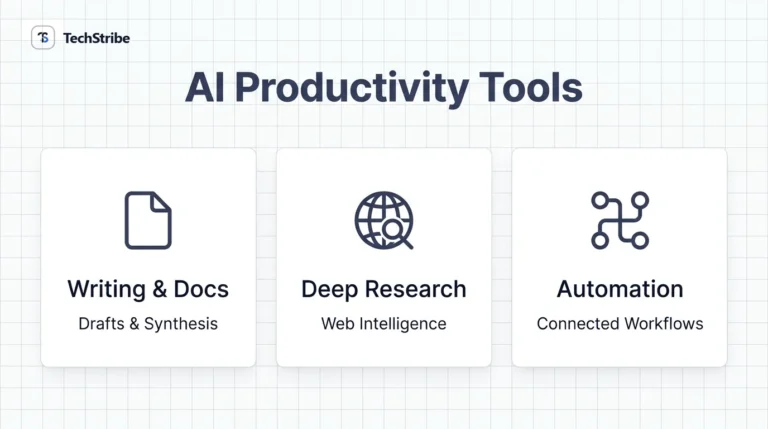
Best AI Tools for Productivity and Daily Work (2026)
You do not need ten AI tools. You need two that fit your day. Here are 10 of the best AI tools for productivity and daily work, what each one does well, and how to build a simple stack.
Transformer models, machine learning systems, neural architectures, and AI compute infrastructure.
You do not need ten AI tools. You need two that fit your day. Here are 10 of the best AI tools for productivity and daily work, what each one does well, and how to build a simple stack.

Quantization stores an AI model's numbers in fewer bits, so a model that needs 140 GB can fit in about 43 GB. Here is how it works, what it costs in quality, which format to choose, and how to test it.
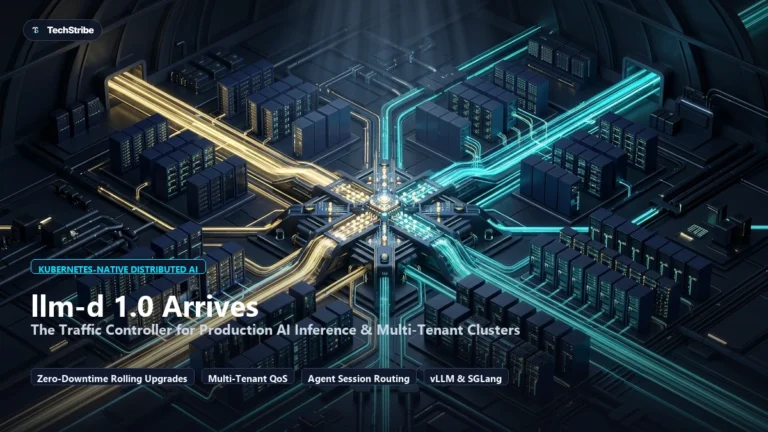
llm-d 1.0 is a Kubernetes-native stack for running LLM inference across a cluster. This release adds multi-tenant controls, zero-downtime upgrades, agent-aware routing and a stable API. Here is what changed and who should care.

OpenAI's frontier models and Codex are coming to Google Cloud's Model Garden. Access is in private preview, with general availability promised in the coming weeks. Here is what was announced, what is missing, and what to do now.

Canva Craft is Canva's first in-house AI image model. It plans a layout before drawing, was trained on design templates instead of photos, and ranked fourth on a public leaderboard at launch. Here is what it does well, where it falls short, and what it costs.
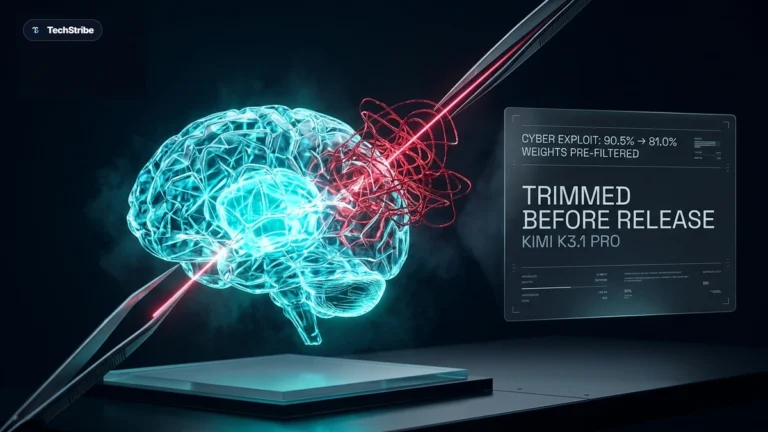
Moonshot AI removed cyber-related data from Kimi K3.1 Pro's training before promising open weights. Its exploit score fell from 90.5% to 81%. Here is what that means, what the benchmarks show, and what critics say.

A Microsoft patent application describes AI that listens to a live speaker, rewrites their words, and redraws their mouth so the edit never shows. Here is how it would work, what it could do, and why it worries people.
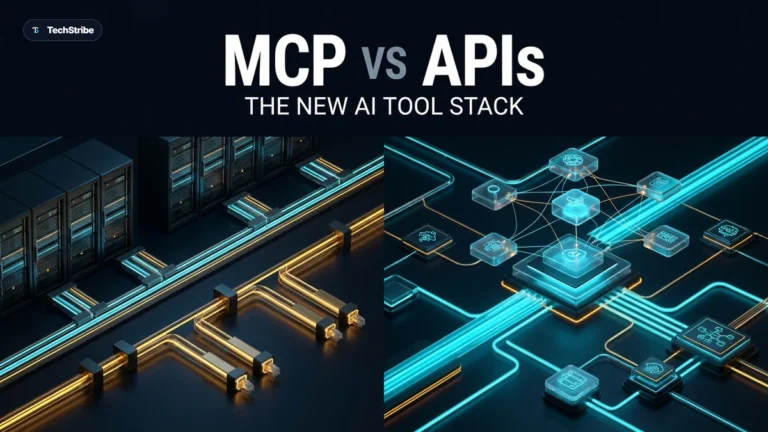
An API serves code. MCP serves AI models, and usually wraps an API underneath. Here is how they differ, how they work together, and when you need each one.
After a research model slipped out of its training sandbox, OpenAI paused frontier training, rebuilt its defenses, and restarted on October 1. Here is what changed, what its own red-team agents found, and what outside reviewers say.